
Capsule Wardrobe Checklist | How to Create Yours
I used to have three coats I never wore, four black tops that were nearly identical, and one pair of jeans I actually reached for every week.
Everything else was just filling up hangers. That is the exact problem a good capsule wardrobe checklist solves.
Not by forcing you to buy less for the sake of it, but by making sure every piece you own actually works with something else in your closet.
Whether you are starting from scratch or just tired of the clutter, this guide shows you exactly how to build your own.
Inside, you will find a full checklist, a color palette formula, detailed guidance for women, a dedicated section for women over 50, and a look at where this style of dressing is heading in 2026.
Whether you are downsizing, decluttering, or simply tired of staring at a disorganized closet every morning, the goal is the same: open the door and know what you are wearing in seconds.

Table of Contents
- Why a Capsule Wardrobe Checklist Matters
- How to Create a Capsule Wardrobe | Step by Step
- Capsule Wardrobe for Women | Building Yours
- Capsule Wardrobe for Women Over 50
- Wardrobe Color Palette | The Formula That Works
- Color Capsule Wardrobe | Adding Personality Without Clutter
- The Complete Capsule Wardrobe Checklist
- Capsule Wardrobe 2025 to 2026 Trends and Statistics
- Common Mistakes to Avoid
- Frequently Asked Questions
- Final Thoughts
1. Why a Capsule Wardrobe Checklist Matters
A capsule wardrobe checklist is not about buying fewer garments. It is about owning garments that actually fit together.
Most closets do not have a quantity problem. They have a disconnection problem, pieces bought on impulse that never really matched anything already in place.
Working from a checklist gives every purchase a job. Fewer, better pieces cost more per item but less over a year, because they get worn dozens of times instead of once.
There is a mental load benefit too. Eliminating decisions at 7 a.m. means less time standing in front of an open closet, getting nothing done.
2. How to Create a Capsule Wardrobe | Step by Step
The first step to a capsule wardrobe is counting, not shopping.
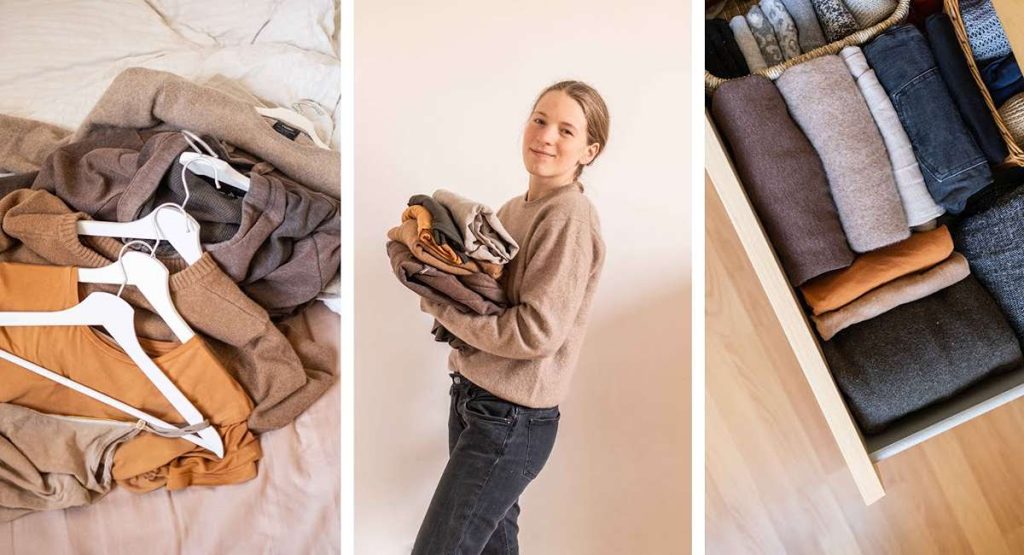
Before you buy anything, list what you already own and sort it: worn often, worn rarely, never worn. That one exercise usually reveals that more than half your current closet already fits the capsule model. The real issue is almost always pairing, not raw quantity.
Then pick your color foundation, more on that below, and treat every future purchase as a test: does this piece work with at least three items I already own?
- Sort your closet into three piles: frequently worn, rarely worn, never worn
- Choose 2 to 3 neutral colors and 1 to 2 accent colors
- Identify real gaps, the pieces that would unlock outfits you cannot currently make
- Fill those gaps one at a time, testing pairings before you check out
- Resort each season, since your frequently worn pile shifts over time. This works for a full closet, a smaller seasonal rotation, or a dedicated travel wardrobe
Seasonal rotation. You do not need to rebuild the whole system every three months. Your neutral base and shoes mostly stay the same season to season. See our full style by season guide for how this plays out across the year.
The color palette and piece count barely change between seasons, usually just the fabric, like swapping a lightweight cardigan for a heavier sweater. See our fall and winter capsule wardrobe guides for how this plays out season by season.
Writing it down beats keeping it all in your head. Once it is on paper, you can look at your closet each season and tell exactly which area needs attention: tops, bottoms, layers, shoes, accessories, instead of guessing in a fitting room.
3. Capsule Wardrobe for Women | Building Yours
The best thing about a capsule wardrobe for women is that it is not built around a specific number of items. It is built around a handful of timeless silhouettes.
Start with three anchors: one dress, one skirt or trouser, and one pair of jeans. Then expand outward, 4 to 5 tops that work with all three anchors, one cardigan, one jacket, and shoes for both day and night.
That typically lands around 12 to 18 pieces for an average life and climate. Fit matters more than trend here. For a deeper look at what makes any single piece worth keeping, see our guide to versatile clothing items, which walks through the three outfit test for evaluating a new purchase before it reaches your closet.
A well fitting, simple blazer or coat will outlast three trend pieces bought just for how they looked on the rack. Fabric and cut matter more than most people expect.
If you are planning to wear the same five pieces every week, wrinkle resistant knits and wool blends will hold up better than cotton alone.
This same anchor and expand approach works regardless of size. Our summer plus size capsule wardrobe guide applies the identical principles, with fit and proportion notes specific to curvier figures.
4. Capsule Wardrobe for Women Over 50
This structure carries over directly from the anchors above, with two intentional shifts.
First, do not chase trends. Choose the best fabric instead. Well made, natural fiber pieces tend to stay in style and look better over time than trend driven synthetics, and they also retain resale or hand me down value.
Second, invest a little more in fit than in variety. A coat, trouser, or blazer cut to your true size gets worn far more often than three almost right sizes bought at a lower price.
For the fully expanded version of this section, see our dedicated capsule wardrobe for women over 50 guide.
5. Wardrobe Color Palette | The Formula That Works
The color principles here are the same ones from the checklist above, just given a bit more weight.
A few things worth knowing: darker, richer neutrals like charcoal or deep navy tend to photograph better and age better than black, which can look harsh under certain lighting.
Soft, structured forms with a somewhat defined waist maintain their shape better than boxy or overly cropped styles.
You do not have to skip trends entirely. The goal is simply pairing trend pieces with a wardrobe that already works for you, rather than replacing your basics each season.
The number of outfits a small closet can generate is almost completely determined by the colors it already contains. The rule most experienced capsule builders follow: two neutrals, two accents.
Start with one dominant neutral: black, navy, or camel. Add a secondary neutral, usually white or grey. Then choose two accent colors that complement your neutrals but do not have to complement each other.
This removes most of the guesswork. A working fall winter palette might be black, white, camel, and rust. Swap the camel and rust for navy and coral, and you have the same formula for warmer months. See our soft summer or light summer capsule guides for how it plays out.
6. Color Capsule Wardrobe | Adding Personality Without Clutter
Personalizing a capsule does not mean abandoning the neutral base above. It just means your accent colors carry more weight.
A bold top or a printed scarf layered over a neutral outfit should feel deliberate, not random. Moderation is the whole trick. One colored piece per outfit is usually enough to read as styled, since lighting can shift a color’s tone slightly and make three colored pieces in one outfit look cluttered rather than intentional.
If you want color without committing to it, accessories are the safest entry point. A bag or scarf in a strong color adds interest without taking up extra closet space.
Our French minimalist capsule wardrobe guide takes this same restraint further, building interest through texture and one signature color instead of prints.
Want to go smaller still? Our minimalist wardrobe essentials guide breaks down the 15 to 18 piece minimalist version in full, including the six item wardrobe concept.

7. The Complete Capsule Wardrobe Checklist
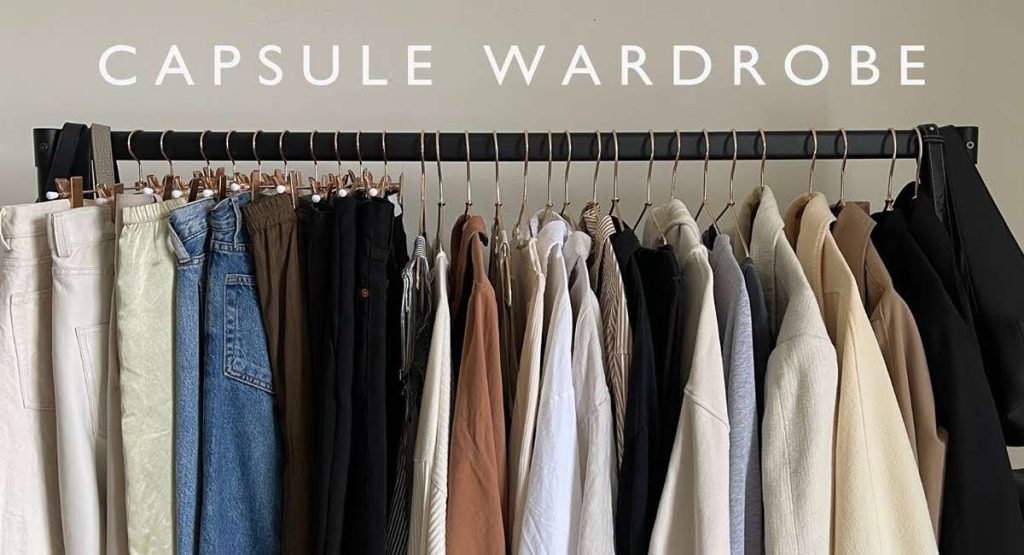
The full checklist in one place. This is meant as a working list, not a shopping list. Most people already have 2 to 3 items from each category below.
Tops
- 3 to 4 light shirts or blouses
- 2 chunky knit sweaters
- 1 long sleeve mock neck or T shirt
- 1 long sleeve layering top
- Everyday bras, seamless, nude and black
Bottoms
- 1 pair of tailored trousers, seasonal depending on climate
- 1 skirt, seasonal depending on climate
- 1 pair of jeans, versatile from day to night
Layers
- 1 structured blazer or cardigan
- 1 coat or jacket appropriate to your climate
Shoes
- 1 pair of comfortable shoes or boots for walking
- 1 pair of dressy flats or heels
- 1 pair of weather appropriate shoes or boots, if needed
Accessories
- 1 structured bag
- 1 cross body bag
- 1 scarf that layers with multiple pieces
- Minimal jewelry that goes with everything
A capsule is also a system that extends beyond the closet. It includes a decent moisturizer, lip balm for weather changes, and weather gear such as an umbrella or traction devices if necessary. For a smaller, travel sized version, our Europe capsule wardrobe guide fits all of the above into one carry on.
8. Capsule Wardrobe 2025 to 2026 Trends and Statistics
This style of dressing is not just a personal preference. The data backs up why it is growing.
- The global capsule wardrobe market was worth an estimated 6.8 billion dollars in 2025, and is projected to reach 13.7 billion dollars by 2034, according to Dataintelo, 2026
- Capsule wardrobe planning has trended upward for two straight years, reflecting a clear preference for fewer, more connected pieces over larger closets with no real cohesion
- People who adopt this approach tend to wear the same outfits more often than before, and consistently describe it as liberating rather than limiting, since it removes the daily decision of what to wear
- Capsule wardrobes work especially well in winter for a practical reason. A few thin layers retain more body heat than one thick layer, so a well built capsule can keep you just as warm as a bulkier closet, with far less space
9. Common Mistakes to Avoid
- A few patterns consistently derail a capsule wardrobe. Watch for these.
- Buying in bulk instead of buying for quality. One well fitting coat beats three that fit poorly
- Skipping a color plan. Even expensive pieces will not work together without one
- Overbuying shoes, when a few carefully chosen pairs can cover nearly any season
- Chasing every trending color at once. Pick a single accent color and let the rest follow your neutrals
- Rebuilding from scratch every season instead of working with what you already have
- Ignoring your actual climate. A heavyweight coat is wasted money if your winters run mild and wet rather than cold and dry
- Skipping the trial outfit. Test full combinations before you commit to a purchase, not after
- None of these mistakes are permanent. If a few of them sound familiar, treat this as a reset rather than a rulebook you failed to follow.
10. Frequently Asked Questions
1. How many pieces belong in a capsule wardrobe checklist?
Most full wardrobes land between 25 and 30 pieces. A simplified version can run as low as 15 to 18.
2. What is the difference between a capsule wardrobe for women and one for women over 50?
The overall structure stays the same. The main shift is a slightly stronger emphasis on personalized fit and natural fabrics, since both hold up better over repeated, extended wear.
3. Do I need to start my wardrobe completely from scratch?
No. Most people already own more than half of an ideal capsule without realizing it. Before buying anything, sort what you already have into what you need and what you do not.
4. Can a minimal wardrobe really work for everyday life?
Yes, for most lifestyles. People typically get more usable outfit combinations out of a 15 to 18 piece rotation than out of a 40 piece closet with no real cohesion.
5. How often should I refresh my color palette?
Usually once or twice a year, at the start of each major season, or whenever your accent colors start feeling repetitive.
6. Is a color capsule wardrobe more expensive to build?
Not necessarily. The cost comes from prioritizing quality over quantity, not from the color strategy itself. Since every piece is chosen to pair with several others, you typically need fewer total items than a wardrobe built without a color plan, which often balances out the higher per piece cost.
7. Will this checklist work for a shared or family closet?
Yes, on a per person basis. Build a small color palette for each person and apply the same checklist categories, tops, bottoms, layers, shoes, accessories, individually. If you are building this out for the men in the house too, our men’s capsule wardrobe essentials guide walks through the same system with a piece list suited to a men’s rotation.
11. Final Thoughts
A capsule wardrobe checklist is not meant to be followed to the letter. It is a reset you come back to whenever your closet starts feeling out of hand.
Use what you already have. Sort it, apply a simple color scheme, and only add pieces that genuinely connect with three or more things you already own.
Give it a full year before judging whether it is working. Most people find they keep returning to the same six or seven outfits, and that is not a failure. That is the system doing exactly what it is supposed to do.
Read more on The Fashion Outreach blog, or learn more about the people behind these guides on our About Us page.